
Our highlights
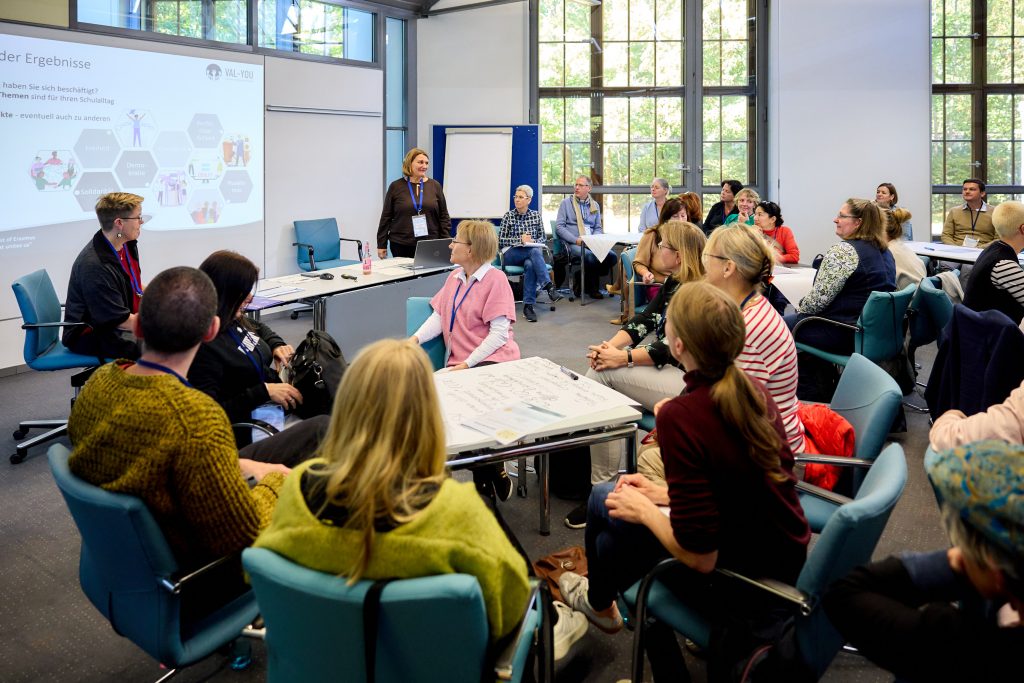
VAL-YOU at the Best of Erasmus 2025 event
We are honoured to have been invited by the German National Agency for School Education to present our project VAL-YOU at the Best of Erasmus 2025 event in Potsdam on 2 October 2025.
During the event, we had the pleasure of offering a practical workshop for teachers on European values in school education and the role of Erasmus+ in fostering these values across Europe.
A heartfelt thank you to everyone who participated, shared ideas, and helped make the exchange so inspiring!
- VAL-YOU Project Presented at EU Working Group on Citizenship Education
 Our partner Zentrum polis, the Austrian Centre for Citizenship Education in Schools, had the pleasure to be invited to the 16th meeting of the Working Group on Equality and Values in Education and Training of the European Commission on 21 and 22 october 2025. Patricia Hladschik presented first results of the VAL-YOU project during a… Read More »VAL-YOU Project Presented at EU Working Group on Citizenship Education
- Game Development: A Game in Itself
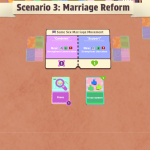 Developing a game is much more than coding — it’s a constant balancing act between creativity, realism, and playability. Beyond the technical side of software development, game design brings unique opportunities and complex questions that shape how players learn and engage. Realism vs. Gameplay Our scenarios are inspired by real-world democratic processes. But perfect realism… Read More »Game Development: A Game in Itself
Our news on Facebook

👧👦 Children's rights in everyday life: do we always recognise them? 🌍Every child has rights. But how often do we stop to think about how these rights affect everyday life?🏫 Going to school, having time to play, expressing an opinion, feeling safe…These everyday experiences offer opportunities to reflect on children's rights. But what happens when those rights are not respected?📖 Discover “Every Day is Children's Rights Day”!This practical activity, available in the VAL-YOU Toolkit, invites students to explore children's rights through a special diary.✏️ Students reflect on their daily routines, compare different life situations and identify moments when children's rights are respected or violated.💬 Through individual reflection, group work and classroom discussion, students aged 11–14 can develop empathy, critical thinking and a deeper understanding of human dignity, equality and respect.✨ Democratic education starts with recognising that every child's rights matter, every day.📚 Bring children's rights into your classroom with the VAL-YOU Toolkit!🔗 Explore the activity:democracy-education.eu/teaching-materials/every-day-is-childrens-rights-day/#VALYOU #ErasmusPlus #DemocracyEducation #ChildrensRights #EuropeanValues #HumanRightsEducation #Equality #CivicEducation #TeachingResources
🗣️ How to teach controversial issues in the classroom? 🏫What happens when students strongly disagree on a sensitive topic?💬 Different opinions are a natural part of democratic life. But discussing controversial issues in the classroom can sometimes be challenging for teachers and students alike.Should teachers avoid difficult conversations, or turn them into opportunities for learning?🌍 Democratic education means learning how to disagree respectfully.The VAL-YOU Toolkit features “Teaching Controversial Issues”, a practical training resource developed by the Council of Europe to support educators in addressing sensitive and divisive topics.📚 Through practical strategies and classroom activities, teachers can learn how to:✅ Create a safe and respectful environment for discussion.✅ Encourage students to listen to different perspectives.✅ Promote critical thinking and constructive dialogue.✅ Help students express their opinions while respecting the rights of others.✨ A democratic classroom is not one where everyone agrees, but one where everyone can learn to discuss differences respectfully.🔗 Explore this resource in the VAL-YOU Toolkit:democracy-education.eu/toolkit/teaching-resources/#VALYOU #ErasmusPlus #DemocracyEducation #EuropeanValues #TeachingResources #CriticalThinking #DemocraticDialogue #CivicEducation #TeacherTraining
🤖🌍 Does AI represent everyone?Imagine asking an AI tool to generate an image of 50 people living in a European city.👥 Who would appear in the picture? And who might be missing?Artificial intelligence can generate impressive images, but do these images truly reflect the diversity of our societies?📚 Through the activity “Does AI recognise the diversity of our world”, available in the VAL-YOU Toolkit, students explore this question by comparing an AI-generated image of Vienna's population with real statistical data.🔎 Which social groups are represented? Which are underrepresented or completely absent?By analysing images, comparing data and discussing their findings, students aged 11–14 learn to recognise potential biases in AI-generated content and reflect on the importance of equal representation.💡 Democratic education also means learning to question how our world is represented in digital spaces.This classroom activity encourages critical thinking, digital citizenship and a deeper understanding of equality and inclusion.🔗 Discover the activity in the VAL-YOU Toolkit:democracy-education.eu/teaching-materials/ai-diversity/#VALYOU #ErasmusPlus #DemocracyEducation #EuropeanValues #ArtificialIntelligence #DigitalCitizenship #Equality #Inclusion #MediaLiteracy